
CLEANING MACHINES
Syntech designs advanced systems to wash and process all kinds of materials in many different sectors, helping the customer to choose the best solution for superficial processing and carrying out tests before the actual production.
The wide range of products also includes: ultrasonic multi-tank systems, belt and tunnel systems, drying and demineralization units.
How ultrasonic cleaning works
Ultrasonic cleaning removes contamination by exploiting cavitation, not the mechanical action of brushes or jets: this is why it reaches blind holes, threads and cavities that no water jet could clean.
The principle: cavitation
Piezoelectric transducers are applied to the bottom or to the walls of the tank, powered by a generator that converts mains electricity into a high-frequency signal. The transducers vibrate and transmit pressure waves to the liquid, alternating rapidly between compression and rarefaction.
During the rarefaction phase microscopic vapour bubbles form; in the following compression phase those bubbles collapse in on themselves. It is the implosion, not an explosion, that does the work: each collapse generates, for a fraction of a microsecond, an extremely fast micro-jet and a very high local temperature, concentrated on a tiny area. Multiplied by millions of bubbles per second, this produces a capillary and uniform detachment of contamination.
The key point is that cavitation acts wherever the liquid reaches: if the detergent enters a blind hole, cleaning takes place inside it exactly as it does on the outer surface.
Frequencies: 20 and 40 kHz
Frequency determines bubble size and therefore the character of the process. Syntech systems operate at 20 kHz and 40 kHz, the two frequencies that cover almost all industrial applications.
At 20 kHz bubbles are large and implosions particularly energetic: this is the choice for stubborn soils, heavy oils, abrasive pastes, machining residues and robust parts.
At 40 kHz bubbles are smaller and more numerous, the action is finer and more uniform and penetrates small geometries better: this is the frequency for delicate components, finished surfaces, optics, electronics and parts with blind holes or narrow threads.
The choice is not secondary: on soft materials such as aluminium, copper or light alloys, a frequency that is too low combined with long cycle times can cause cavitation erosion. This is why frequency, chemistry and cycle duration are defined together when the process is designed.
Detergent and temperature
Ultrasound does not clean on its own: it cleans together with the detergent, and the chemistry must be selected according to the contamination and the material. Alkaline detergents are effective on oils, greases and machining emulsions, but must be used with care on aluminium; neutral products are suitable for soft metals and delicate alloys; acid formulations are used for oxides, limescale and passivation.
Temperature is the other decisive parameter: heating the bath, typically between 50 and 70 °C for aqueous detergents, lowers surface tension and makes cavitation more effective. Getting too close to boiling point, however, degrades the effect, because the bubbles fill with vapour and implode less energetically.
Finally, one step is often overlooked: degassing. A freshly filled bath contains dissolved air, which dampens cavitation. Running the ultrasound for a few minutes before loading the parts expels the air, and only then does the tank work at full efficiency.
The complete cycle and practical tips
In industrial practice ultrasonic cleaning is rarely a single tank. A typical cycle includes washing with detergent and ultrasound, one or more rinses — the last one with demineralised water, often produced by reverse osmosis, to avoid stains and salt deposits — and finally drying, with filtered hot air, under vacuum or by assisted evaporation. In automatic configurations, basket transfer between tanks is handled by manipulators or gantries, with programmable process recipes.
A few precautions make the difference: parts should never rest directly on the bottom of the tank, but be placed in baskets that keep them raised and spaced; excessive loading or parts shielding each other create shadow areas where cavitation does not reach; the liquid level must match the specified one, because it affects the distribution of the acoustic field.
When it is the right choice
Ultrasonic cleaning is the right solution when geometry is complex, when the required cleanliness level must be measurable and repeatable, when parts are delicate and cannot withstand mechanical action, and when the process must be automated and documented. It is less suitable when soiling is coarse and geometry simple: in those cases a spray washer can be faster and cheaper. Applications span all sectors, each with different requirements.
Every Syntech system starts from pre-production cleaning trials in our laboratory, to validate chemistry, frequency and timing before the machine is built. Contact us to define the most suitable process for your components.
Immersion cleaning and hydrokinetic cleaning
In our immersion cleaning machines the part is submerged in the detergent solution and treated with ultrasound. Alongside the ultrasonic action there is hydrokinetic cleaning, a forced flow generated in the tank by the recirculation pumps and particularly effective on machining oils: the two actions are integrated in the same machine and can be combined within the same cycle.
Immersion cleaning
In immersion cleaning the part is fully submerged in the detergent solution. This is the substantial difference compared with a spray washer: the liquid reaches blind holes, threads, undercuts and internal cavities, that is to say all the geometries a direct jet cannot hit. During immersion the basket performs an alternating vertical movement that continuously renews the liquid in contact with the surface and improves the effect of the ultrasound. It is the right solution for batches of small parts handled in baskets and for components with complex shapes.
Hydrokinetic cleaning
Hydrokinetic cleaning uses a forced, turbulent flow generated inside the tank by the recirculation pumps. The mechanical action of the flow detaches and removes machining oils, emulsions and residues carried over from machining operations, which tend to remain attached to the surface. Unlike a spray washer there is no direct jet on the part: the action is distributed throughout the whole volume of the tank, so it does not depend on how the part is oriented in the basket and does not mechanically stress delicate components.
Why immersion, hydrokinetics and ultrasound work together
In our machines the hydrokinetic action is integrated in the same tank where the ultrasound operates; it is not a separate plant. The hydrokinetic flow removes the coarse, oily part of the soil and keeps the bath in movement, while ultrasonic cavitation acts on fine particulate and inside cavities. Combined in the same cycle they make it possible to treat parts arriving oily from machining with no intermediate manual steps, with times and temperatures set from the panel and repeatable batch after batch.
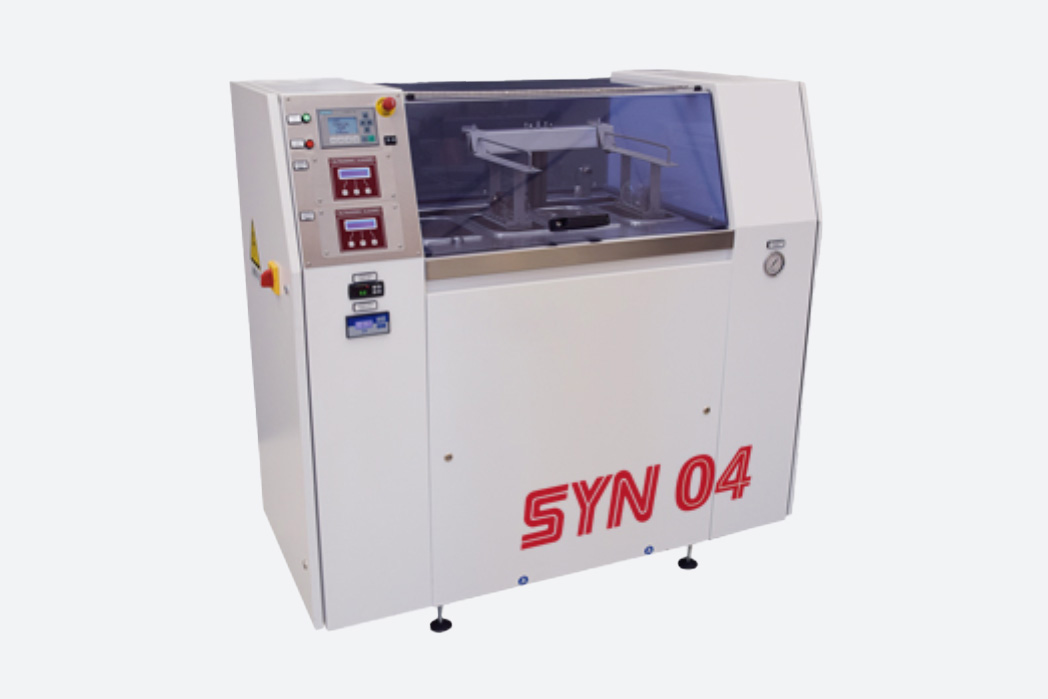
Designed for high quality in small spaces.
Models SYN 04 and SYN 06 are ultrasonic cleaning machines with a very compact design. These machines are closed and protected against external air contamination, they are equipped with a built-in system for water purification.
The wash cycle is automatic and it includes a pre-drying system, while the operator is responsible for the basket loading and unloading operations.
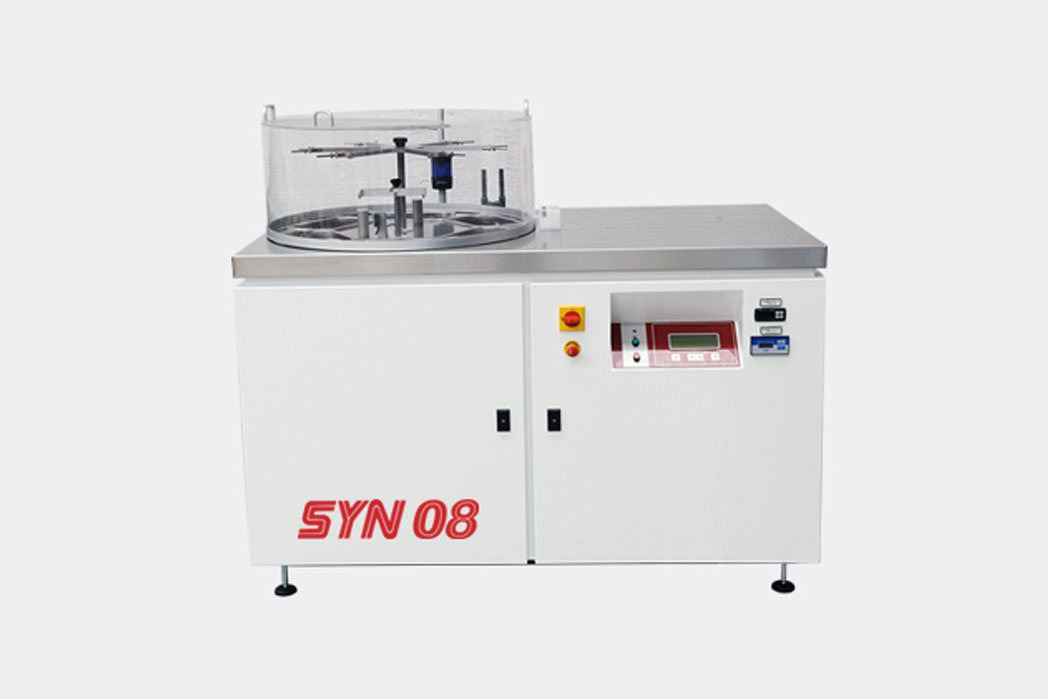
Designed for performance in small spaces.
Models SYN 08 and SYN 12 are ultrasonic cleaning machines with a compact design, ideal for deep cleansing of various industrial components. The wash cycle is automatic and it includes a pre-drying system, while the operator is responsible for the basket loading and unloading operations.
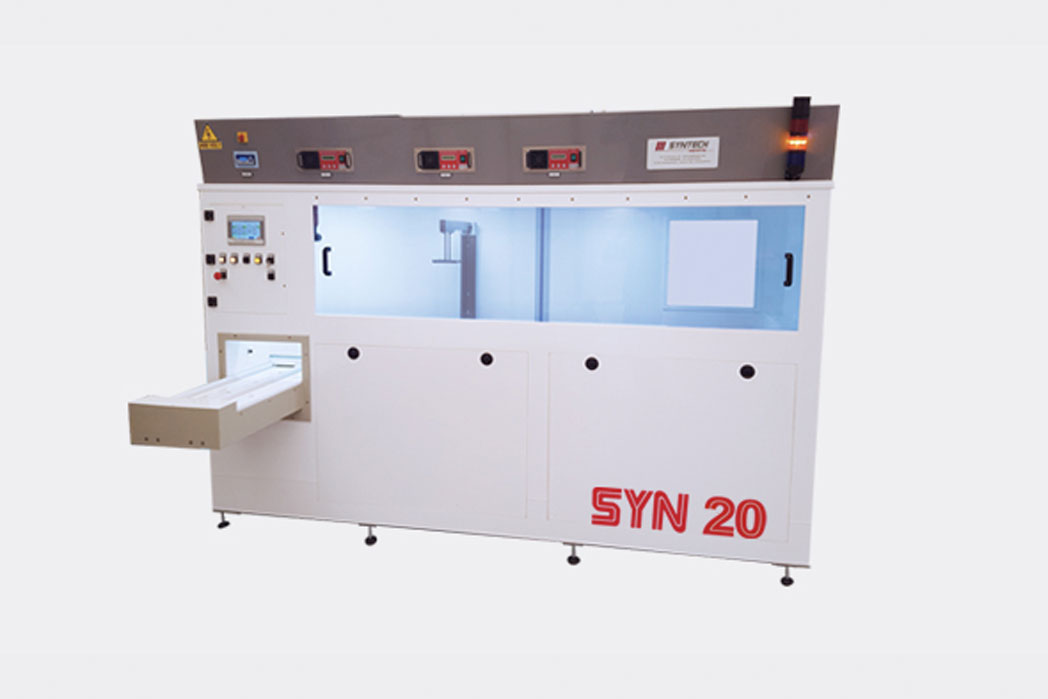
Designed for high quality.
The model SYN 20 is an ultrasonic cleaning machine but the wash cycle does not require all standard steps: in this case, the basket is only placed into the desired tanks. During the immersion phase, the baskets move vertically and alternately, thus increasing the effect of the ultrasounds and improving the quality of the wash cycle.
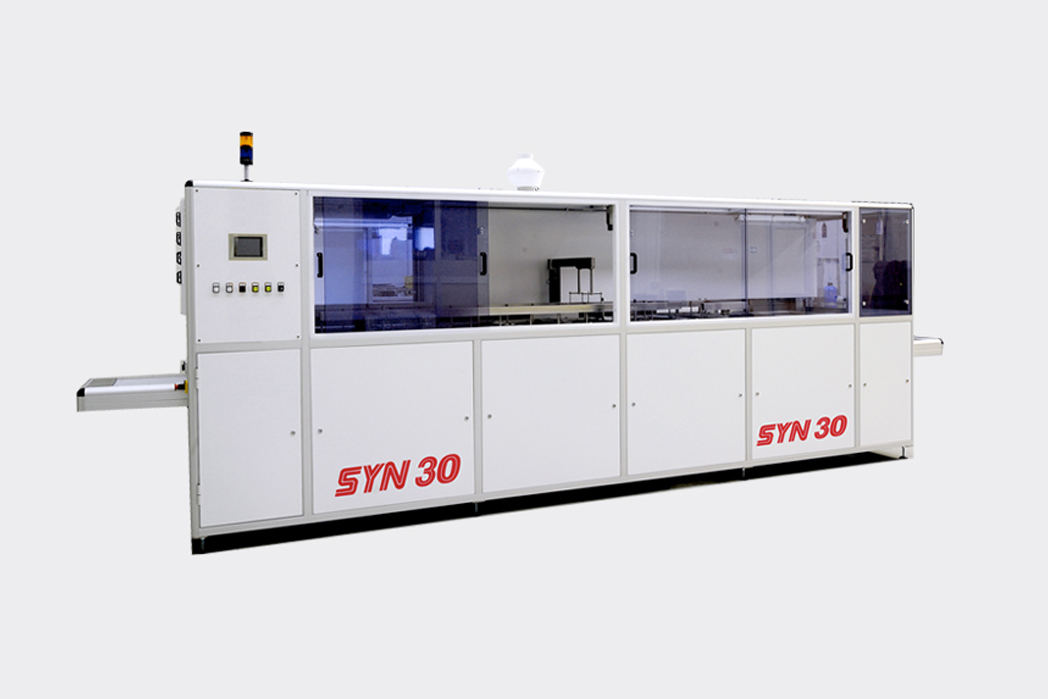
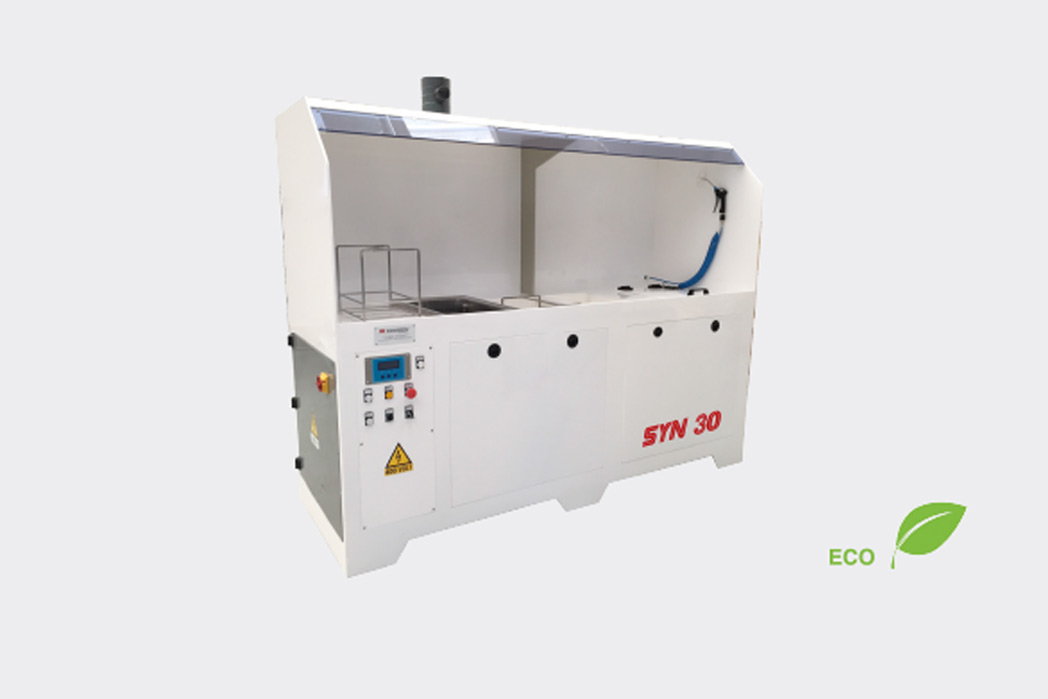
The model SYN 30 is an ultrasonic cleaning machine designed for specific productivity needs. It is closed and protected against external air contamination.
The machine is made of a series of tanks equipped with an automatism located in the back of the machine which allows the baskets to move on towards the unloading area.
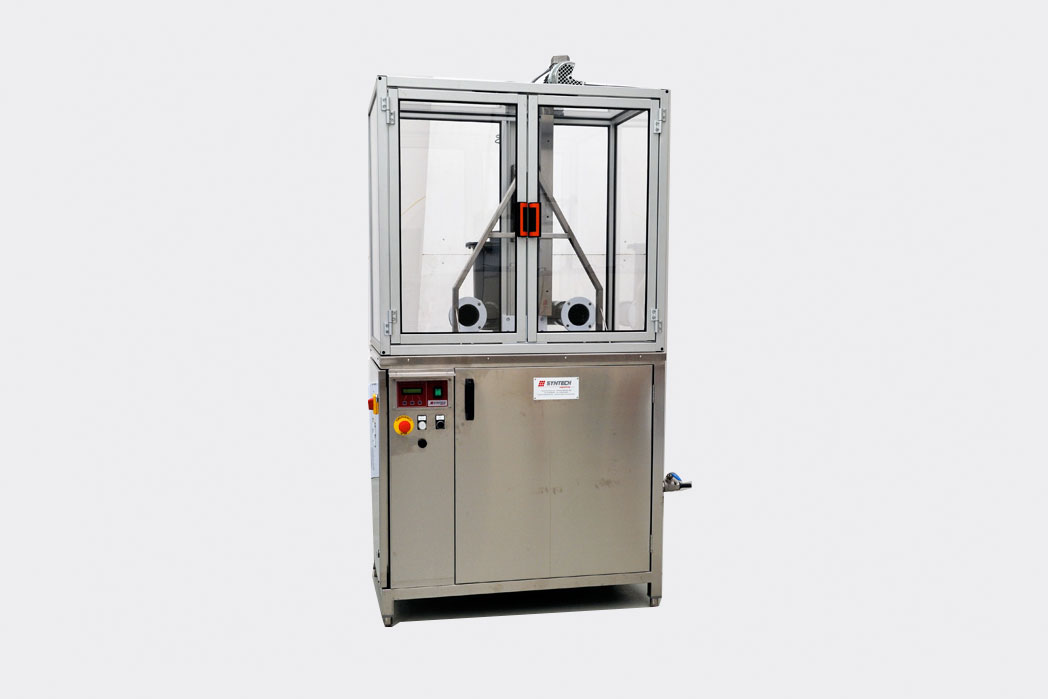
The special feature of the SW + L compared to the SW series can be described with three key points:
1 – Lifting automatism
2 – Upper protection
3 – Suction system
An ultrasonic cleaning machine designed for specific productivity needs.
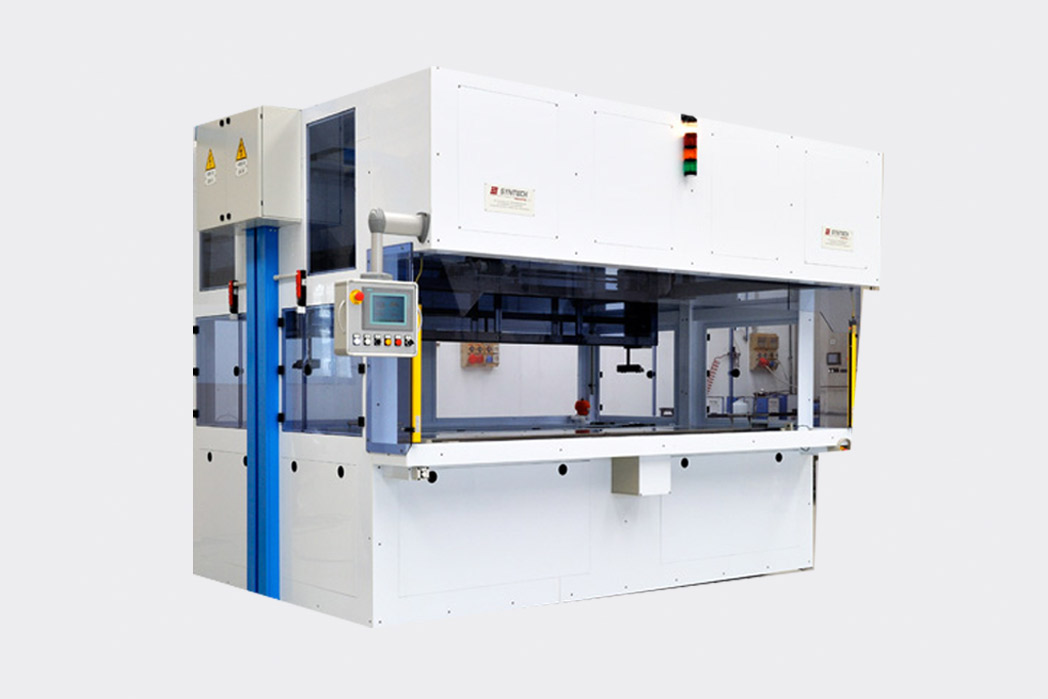
Designed for specific productivity needs.
The model SYN 300 is an ultrasonic cleaning machine where the wash cycle does not require all standard steps: in this case, the basket is only placed into the desired tanks.
The operator is required to load and unload the components contained in the baskets.